Combo menu items
If your POS sells a "Meal Deal" — a burger, fries, and a drink on one line — a combo lets that line map to one Rinvy menu item instead of being unmatched or double-counted. A combo has no recipe of its own; it's a bundle of menu items you already have, each with a quantity per combo sale.
Creating a combo
Go to Menu items and add a menu item.
- Choose the Combo option instead of picking or creating a recipe.
Add the component menu items and how many of each one combo sale includes (e.g., 1 × Cheeseburger, 1 × French Fries, 1 × Fountain Drink).
- Set the combo's selling price and save.
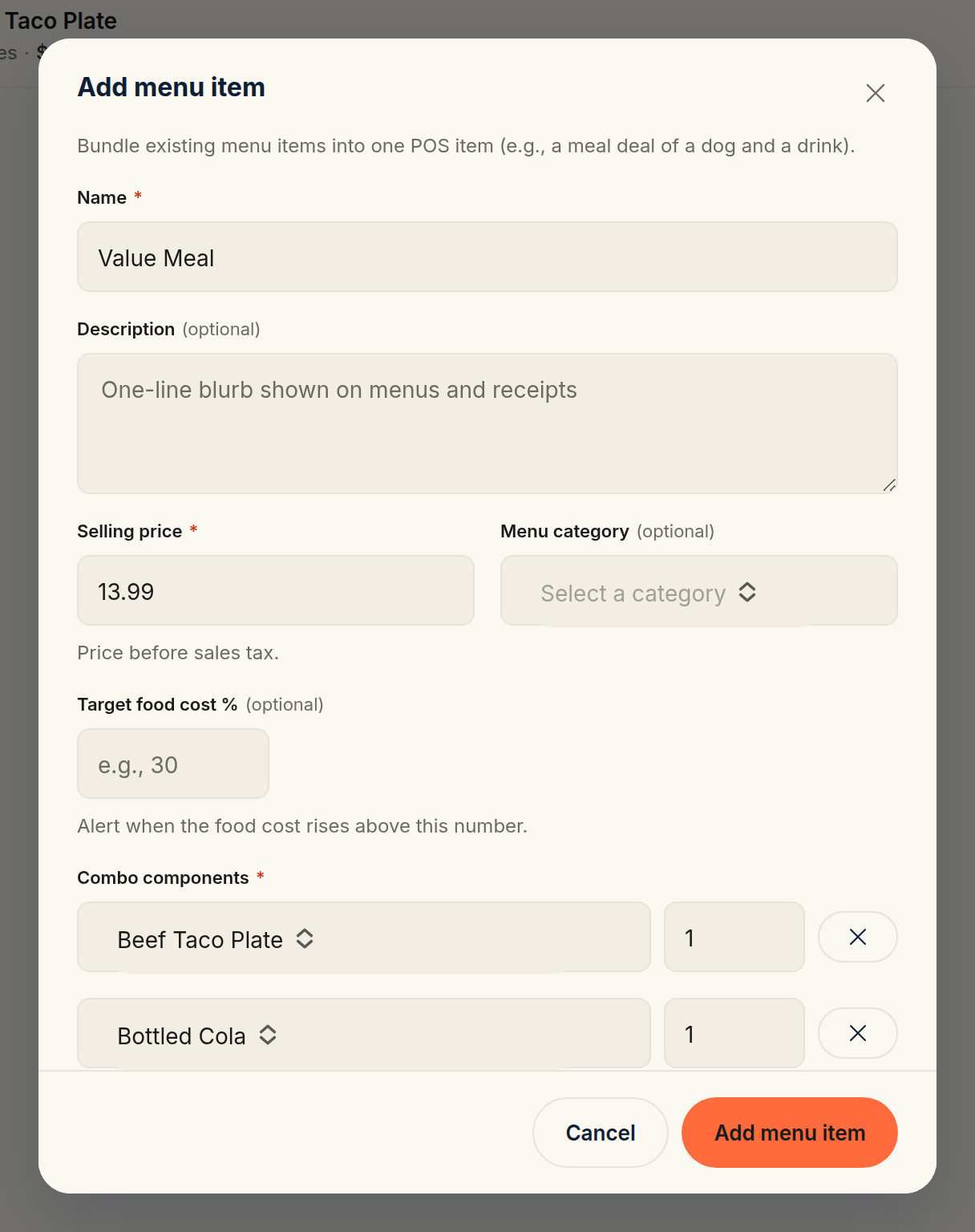
Components must be regular (recipe-backed) menu items — a combo can't contain another combo. A menu item that's used in a combo can't be deleted until it's removed from the combo, so a bundle never silently loses a component.
How combo food cost works
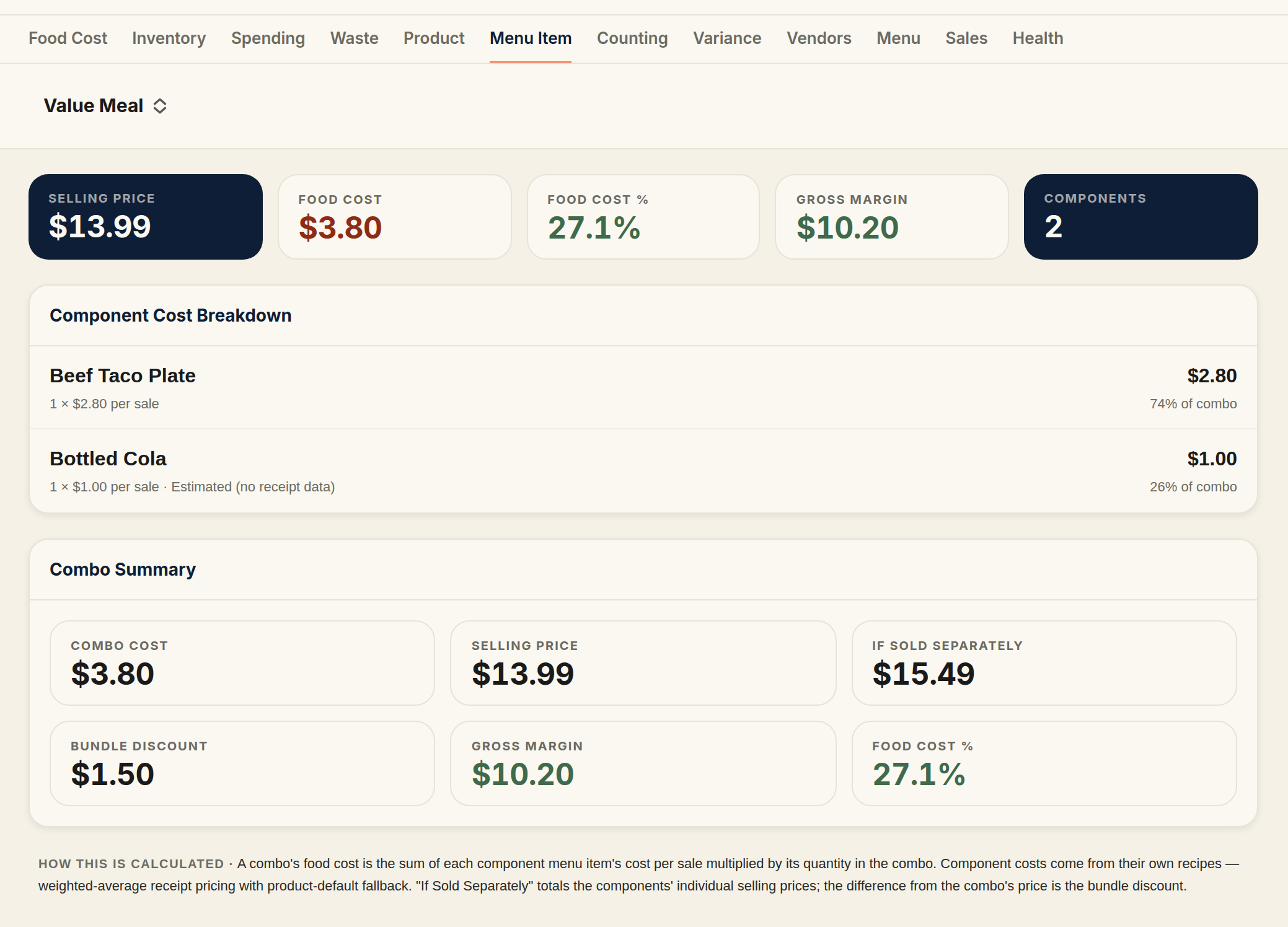
A combo's food cost is the sum of its components' cost per sale, times their quantities. There's nothing extra to configure — when a supplier price change moves a component's cost, the combo's cost moves with it.
- The Menu items list shows the combo's computed food cost and percentage like any other item.
- You can give a combo its own target food cost %; drift alerts fire for combos exactly like recipe items (see food cost targets). Combo alerts are labeled so you know the cost moved through component prices.
- The menu item report shows a component-level breakdown for combos: each component's cost per sale, its share of the combo cost, and the bundle discount — what the components would fetch sold separately versus the combo's price.
How combo sales flow through Rinvy
When sales data records combo sales, Rinvy expands each combo sale into its components before any ingredient math runs. That means:
- Variance report — combo sales count toward the components' theoretical ingredient usage.
- Auto-tracked products — combo sales deplete component stock like direct sales.
- Order list and prep list (sales expectation modes) — forecasted combo demand converts to ingredient needs through the components' recipes.
- Demand forecasts — combos are forecast alongside regular items, labeled by their composition.
Example
"Meal Deal" = 1 × Cheeseburger + 1 × French Fries + 1 × Fountain Drink. Selling 20 Meal Deals contributes 20 burgers, 20 fries, and 20 drinks of ingredient usage — on top of any of those items sold on their own.
Common mistakes
Building the combo's contents as a recipe. If you give a "combo" its own recipe listing raw ingredients, its cost won't follow the components' costs and its sales won't expand — use the Combo option so both stay in sync automatically.
Forgetting to map the POS line. A combo only receives sales when your POS item for the bundle is matched to the combo menu item during sales upload — the components' own POS lines stay mapped to the component items.